Wine Discovery Platform
Reviews, ratings, seasonal recommendations and store-level discovery for supermarket wine shoppers.

Executive Edition • Premium Category Domain
A powerful exact-match .com identity for wine merchandising, category management, private-label programs, supplier partnerships, consumer discovery and grocery retail commerce.
Acquisition inquiries: sales@quosolus.com
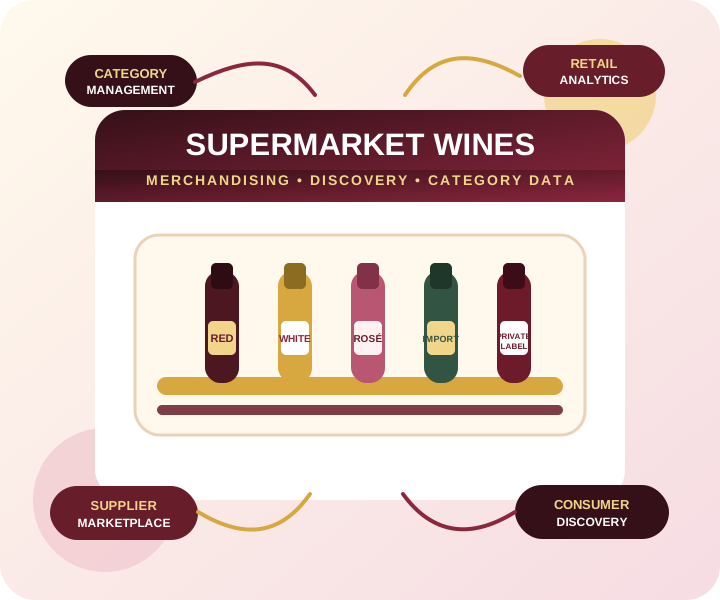
Business opportunities waiting to be built
SupermarketWines.com can support an enterprise retail platform, a consumer destination or a specialized B2B resource serving the grocery wine category.
Reviews, ratings, seasonal recommendations and store-level discovery for supermarket wine shoppers.
Assortment strategy, shelf planning, pricing, promotion and performance intelligence for grocery buyers.
A B2B connection point for wineries, importers, distributors, brokers and supermarket category teams.
Retail brand development, sourcing, packaging, compliance and program support for supermarket operators.
Consumer trends, pricing benchmarks, promotion effectiveness and category performance intelligence.
Industry reporting, buyer interviews, merchandising ideas, awards and retail wine education.
Highest-value buyer categories
The strongest end users are companies that influence assortment, distribution, promotion, technology or consumer choice across the supermarket wine aisle.
National chains, regional operators, cooperatives and omnichannel grocery businesses.
Companies seeking retailer access, supplier visibility and category leadership.
E-commerce, loyalty, digital shelf, promotion, retail media and analytics platforms.
Wine producers, brand developers, packaging firms and sourcing partners serving grocers.
Publishers, category advisors, data companies and consumer education platforms.
Supermarket wine retail strategy
The supermarket wine aisle is becoming more important—and more complicated. For many shoppers, a grocery store is the most convenient place to discover a bottle, compare prices and buy wine alongside ingredients for dinner. Yet the wider wine market is not enjoying automatic growth. Economic pressure, moderation and demographic change are reducing volume in many mature markets.
That tension defines the opportunity for grocers. The next phase of supermarket wine sales will not come from adding more bottles to an already crowded shelf. It will come from making wine easier to understand, more relevant to the occasion and simpler to buy across physical and digital channels.
Supermarkets have a natural advantage: they already own the meal-planning trip. Wine can be presented as part of dinner rather than as a separate specialist purchase. Cross-merchandising Sauvignon Blanc near seafood, Chianti near pasta ingredients or sparkling wine with celebration foods converts an intimidating category into a practical decision.
Expansion in markets that permit grocery wine sales can also create new demand for convenient retail access. The lesson is larger than any one jurisdiction: availability brings shoppers into the category, but guidance determines whether they return.
Today’s shopper is more selective. Some consumers are drinking less often, while others will spend more for a bottle with a clear quality, origin or sustainability story. According to IWSR’s 2026 wine analysis, total still and sparkling wine volume fell 15% between 2019 and 2024, but premium-plus tiers showed greater resilience. Younger legal-drinking-age consumers also demonstrate more experimentation and openness to new styles and formats.
Retailers should therefore segment by need, not stereotype. A useful assortment can serve value seekers, curious explorers, premium shoppers, convenience-led buyers and people choosing lower-alcohol or alcohol-free options. Smaller formats, sparkling wines, lighter styles and clearly identified no- and low-alcohol products can all earn space when local data supports them.
Effective wine category management starts with store-level evidence. Basket data, loyalty behavior, price elasticity, seasonality, out-of-stocks and local demographics should influence the range. A suburban store serving frequent entertainers may need a different assortment from an urban location built around small households and quick meals.
The goal is not endless choice. It is productive choice. Retailers can establish clear opening, middle and premium price bands; protect proven traffic drivers; and reserve controlled space for new products. Regular SKU reviews should measure rate of sale, margin, incrementality and substitution—not supplier enthusiasm alone.
Traditional shelves organized only by country or grape variety assume knowledge many shoppers do not have. Keep those cues where useful, but add plain-language navigation: “light and crisp,” “bold reds,” “weeknight favorites,” “great with grilled foods” or “under $15.” Shelf tags can highlight sweetness, body, food pairing, sustainability credentials and serving occasion.
Displays should change with the customer calendar: summer entertaining, holiday meals, gifting, game day and alcohol-free occasions. Strong signage, disciplined facings and reliable stock levels often do more for conversion than a large assortment with little explanation.
Private-label wine can improve differentiation and margin while giving shoppers a reason to return. It can also fill a precise assortment gap: an approachable house sparkling wine, a credible premium regional bottle or a dependable dinner red at a protected price point.
Success requires more than an attractive label. Grocers need consistent liquid quality, transparent sourcing, packaging that signals the intended tier and a story employees can explain. A good-better-best architecture can expand the program without confusing customers. Retailers should also avoid allowing their own brands to crowd out the national, regional and imported labels that give the aisle discovery value.
Wine discovery increasingly starts before the store visit. FMI and NielsenIQ reported in 2025 that more than 90% of shoppers buy groceries both in-store and online. For wine, that makes complete product content essential: accurate vintage information, bottle size, alcohol level, tasting profile, pairing suggestions, price, availability and compliant imagery.
Digital wine marketing can use retailer apps, email, loyalty offers, shoppable recipes and educational video to reduce uncertainty. Personalization should be permission-based and age-appropriate. Useful recommendations—such as “pairs with items in your basket”—create more value than indiscriminate discount messages.
Online availability is not enough. Search filters should reflect how people shop, including price, style, origin, occasion and dietary or production preferences where claims can be verified. Inventory must be accurate, substitutions carefully governed and pickup orders protected from heat or breakage.
The handoff matters, too. Age verification for delivery and curbside collection must be as dependable as the checkout process in-store. Regulations differ by jurisdiction, so assortment, fulfillment hours, promotion and delivery workflows need local compliance built in from the beginning.
Responsible retailing is an operating system, not a disclaimer. The Federal Trade Commission’s retailer guidance recommends written policies, staff training, register prompts, ID-checking tools, monitoring and recordkeeping. Those controls should extend to self-checkout, apps, delivery partners, retail media and social campaigns.
Retailers should keep alcohol marketing away from youth-oriented products and audiences, present no-alcohol alternatives clearly and avoid messages that encourage excessive consumption. Consistent safeguards protect customers, employees, licenses and long-term trust.
The future supermarket wine department will combine the reach of mass retail with the helpfulness of a specialist. It may feature smaller, data-led assortments; digital shelf extensions; trained associates; QR-enabled education; local supplier stories; curated tasting programs where legal; and recommendations connected to meal planning.
The winning measure will not be bottle count. It will be how quickly shoppers find a suitable product, how confidently they buy it and whether they come back. Grocers that align category management, private-label strategy, digital execution and responsible retailing can turn the wine aisle from a passive wall of inventory into a distinctive, trusted part of the shopping experience.
Available for acquisition
SupermarketWines.com is available through QuoSolus, a specialized portfolio of premium food and grocery industry domain assets.